Decide what must stay stable
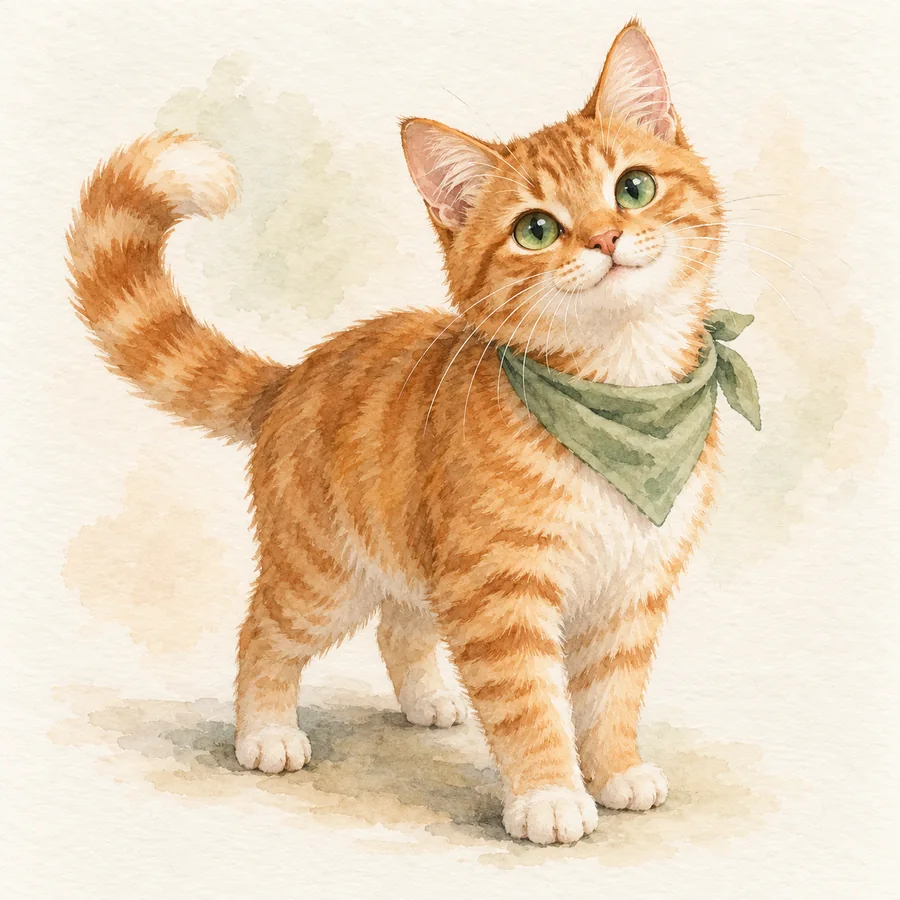
Write an identity checklist containing the traits readers use to recognize the character: orange tabby fur, green eyes, a white chest patch, rounded ears, and a sage bandana, for example. Prioritize details visible in most scenes. Tiny features can make review harder without improving recognition.
Separate stable traits from flexible ones. The bandana’s base color belongs to identity; folds and shadows change with movement and light. Pose, expression, and framing may change freely. Note any scene-specific exception, such as a character taking off an accessory, so an intentional story change is not mistaken for an error.
Choose a clean approved reference
Pick an image where the face, body proportions, and essential markings are easy to see. A neutral pose and a simple background are useful because a busy action scene can hide the details you need. If the story repeatedly shows a side view, add an approved side view rather than relying on a front view alone.
Check the reference before building around it. Look at limbs, ears, tail, and left-right markings, and make sure the written description matches the image. Keep one clearly labeled current reference. Save older versions separately with a note about what changed so the next illustration does not accidentally follow an outdated design.
Keep style notes and scene notes separate
Write a brief art direction beside the reference: medium, line treatment, palette, and surface. Then create a separate note for the current scene: action, emotion, setting, viewpoint, and lighting. This lets you reuse the same identity while changing what happens in the story. Avoid silently rewriting the reference every time you describe a new scene.
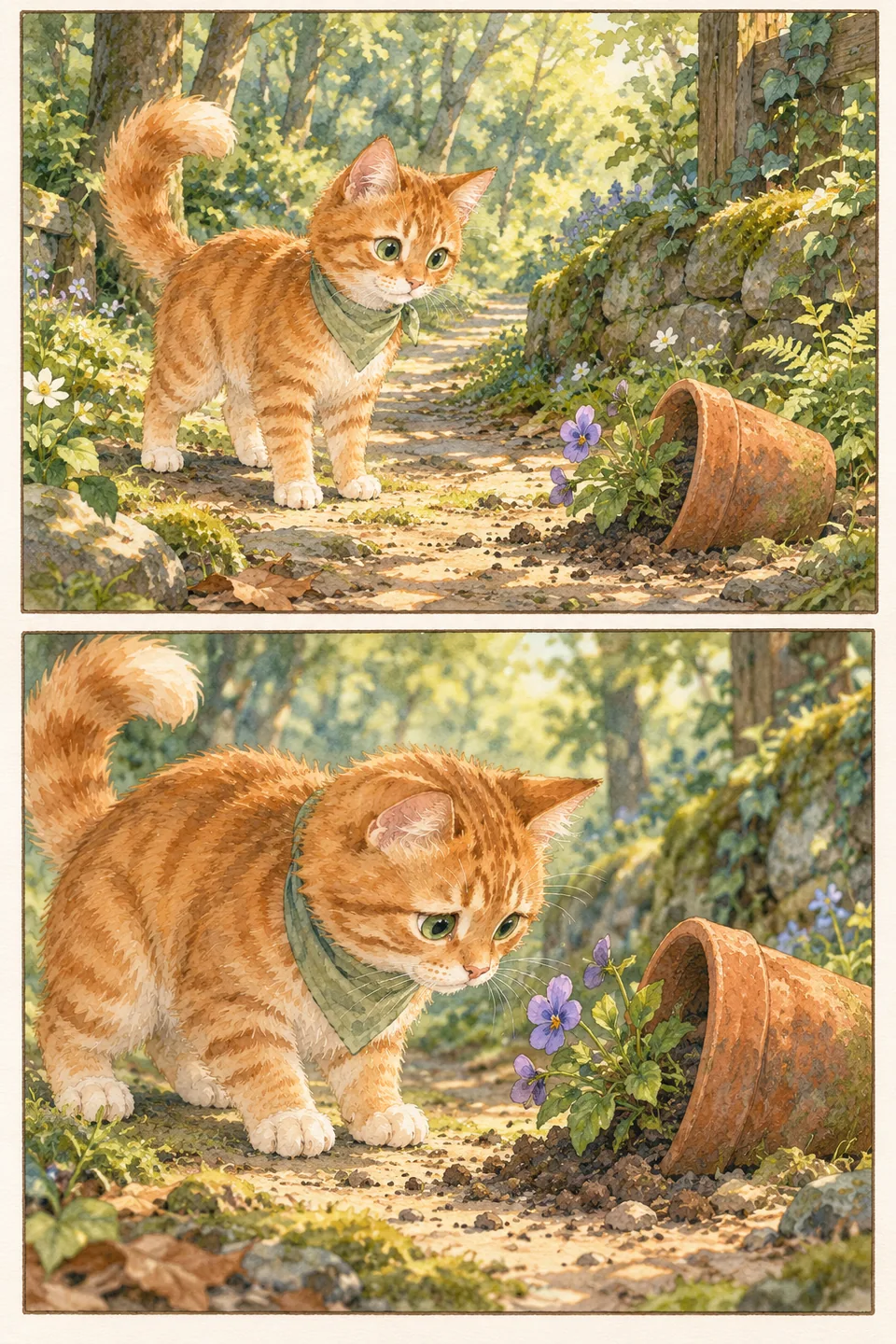
Track important props and locations too. If a purple flower matters to the plot, record its color and container. If the room layout affects an action, make a small plan. A stable character alone will not keep every object and background consistent.
Review new artwork in two passes
First check identity: species, proportions, markings, eye color, and essential accessories. Compare the new image with the approved reference at similar sizes. Then check the scene: who is present, what action happens, where important objects sit, and how the image connects to the previous page. A side-by-side comparison often makes drift easier to notice.
Judge differences by their effect on the reader. Lighting can change a coat’s apparent warmth; it should not turn a key white patch into another marking. Fix changes that obscure identity or contradict the story before polishing minor details. Keep a review note with the page.
Revise the cause and preserve approved work
If the same mistake repeats, check the brief and reference before making another version. An ambiguous marking description or a hidden accessory may be the source of the problem. Change one instruction at a time where practical, and preserve pages you have already approved. Replacing everything at once makes it harder to tell which decision helped.
EnSketch’s developing workflow keeps character artwork in a gallery and uses character references when making comic pages. Its documented examples still show occasional drift in small scene details. Treat the reference as guidance and include a review step in your plan. Keep the approved artwork, identity checklist, style notes, and page corrections together.
Prelaunch preview. Public downloads are not available yet.
Explore the studio